Saturday, November 1, 2025

Coal and flue season

Although 400 St. Charles (lot 86 then) was a mere 37 years old when Murray and Hazel bought it in 1952, it’s not the same as buying a 1988 home these days, in 2025.
 
Dad’s notes when shown the property in 1952.

A home built in 1915 has unique challenges, and you best be prepared to maintain it. That means dealing with rather primitive technologies. The heating system, for instance, was a hand-stoked coal furnace, with cast iron hot water radiators throughout the house, a system dating back to the end of the 19th century.1

Hand-stoked coal furnace2

The cartoon was not overly exaggerated. Coal furnaces were monstrous contraptions. Often swathed in asbestos insulation, they burned coal in a roaring fire that conjured up visions of hell.

A vintage coal “octopus” furnace.

Author Joe Campolo Jr. remembers: 

And when fully stoked up the furnace creaked, groaned, banged and whiffed as the flames roared and the sheet metal expanded and contracted with the heat. It was a formidable entity.

When the coal truck came, as it did three or four times during the winter, that was an exciting time also. The metal coal bin door to the basement bin would be opened and a metal chute from the truck would slide through. The coal would be released into the coal bin amidst much banging, roaring and rumbling. Coal dust would be everywhere, and when done the silence seemed deafening.3

keto, “how to get a coal furnace blazing” [2:20]4
Is it any wonder Dad eventually replaced his with a natural gas furnace?

The basement of the St. Charles home had a separate wood and coal (bois et charbon) room. Deliverymen could dump coal down a chute through a small door in the basement wall and straight into the coal bin corner.

A typical delivery of coal: down the chute and into the coal bin5

There were many fuel companies and coal suppliers in Winnipeg, and they advertised often.

Don’t be fooled. Stoking a coal furnace wearing a tuxedo, top hat and white gloves is not recommended. [Wpg. Free Press, Oct. 25, 1956, p. 10]

Expecting your wife to shovel coal is also unwise. Dad installed a stoker, a large metal bin that fed coal directly into the furnace by an auger. And, yes, you could buy one from Red River Co-op. [Winnipeg Tribune, Sept. 24, 1947, p. 14]

Heating the large uninsulated St. Charles house was a big expense. In 1952 Dad noted an annual fuel cost of $220, more than taxes, telephone and light/power combined.

At Bristol one day, Bill Habington was moaning about his heating bill. Dad had his, too, and dropped it on the table. Bill looked at it and shut up.

$17.90 per ton, available from several dealers. [Winnipeg Free Press, December 15, 1953, p. 20]

Red River Co-op was Dad’s coal supplier of choice.

Murray Fraser, No. 4005, was an early co-op member.

The Red River Co-operative began in 1937 as a fuel supply company. General stores were added a few years later.

In the post war boom, grocery stores were becoming bigger and Co-Op felt they had enough members and demand and built one of the larger grocery stores of the day on Wall Street for around $750,000. The store had more in common with a Walmart in that it had general merchandise and a pharmacy as well as appliances. There was also a credit union, gas station and farm supply building. At the time there was only 4000 members of the Red River Co-Op but this investment proved to be very successful.6

The 20,000-foot Wall Street store was designed by Smith Carter Kateinikoff Associates. More than a grocery store, it was called a shopping centre, and included an adjacent gas station, credit union building and farm supply yard.7

An original full service gas station.8 A newer Co-op service station and convenience store still operate at Wall Street and Ellice Avenue. There are now over 50 Red River Co-op gas bars in Manitoba and in Ontario.

The grocery store on Wall Street was the Walmart of its day. While there to buy groceries and pay your coal bill, you could buy a lawn mower or television.9

The store opening attracted a lot of media coverage. Full-page newspaper ads were hard to miss. They offered plenty of bargains and encouraged new memberships.

With its extensive range of products and services, the Wall Street store was unlike competing grocery stores. [Wpg. Free Press, June 18, 1958, p. 13]

Winnipeg Tribune, June 24, 1958 (the day before the Grand Opening)

Winnipeg Tribune, June 24, 1958 (left side of a 2-page spread)

Winnipeg Tribune, June 24, 1958 (right side of a 2-page spread)

On June 24, 1958 the Winnipeg Tribune coverage included photos that revealed the well-stocked grocery, pharmacy, and appliance departments awaiting the next day’s grand opening. Not shown was the kids’ colouring corner, which always seemed to have only stubs of crayons in brown, black and purple.


Opening day finally arrived on June 25, 1958.

A large crowd showed up for the Grand Opening on June 25, 1958.10

By 1978 Red River Co-op had eight grocery stores in and around Winnipeg, and in 1979 they opened a $10 million Home Centre on McPhillips Street. However, 1980 was a year of “unemployment, stagnation and inflation all at the same time” in Manitoba, and the 70,000-member co-op was hit hard by the recession. High interest rates and fierce competition from new big box stores added more pressure.

It went from recording a $575,000 profit in 1978 to just a $19,000 profit in 1980 and the projections looking forward to 1986 were for a $7 million loss. 

In early October 1982 staff were asked to take a 10% wage reduction while the Co-op sorted out what it was going to do. On October 29, 1982 it was announced that most of its retail operations would be shut and their successful gas bar business would be examined. […] The original food store on Wall Street was the last to close. It was given a reprieve until the end of February 1983.

The number of gas stations were whittled down to just three as the Co-op struggled to sell off its larger properties in a recession. Its operating losses for the 1983 year were nearly $3 million.11

The Co-op reverted to its roots as a fuel supplier, and operated a few gas stations with attached convenience stores. They hung on, though, and were able to turn the corner in 2013 after Sobeys Inc. purchased 213 Safeway stores across western Canada. To avoid overconcentration in the market, the federal Competition Bureau ruled that 23 of these stores had to be sold. Red River Co-op bought four of the Winnipeg properties, and in May of 2014 they opened grocery stores on Main Street, Grant Avenue, and in Southdale and St. Vital.12

It’s been uphill since, even through the difficult Covid shutdown.

Red River Co-op is a profitable and growing Winnipeg-based retail co-op. Their core business includes fuel and convenience stations, food stores, pharmacy, commercial cardlocks and bulk petroleum and propane service.

Formed in 1937, they are currently owned and governed by more than 312,000 members and share the profits and success with them and the communities they live in. They serve the communities of Winnipeg, Gimli, Stonewall, Selkirk, Oakbank, Lorette, Teulon, Niverville, Ste. Agathe, Kenora, Dryden, Selkirk and Stonewall with a total of 49 locations.13

Red River Co-op is poised to celebrate their 100th year in 2037. They remain dedicated to their original principles. Ongoing initiatives include promotion of local products, support of local charities, and the expansion of their network of EV charging stations.

Red River Co-op, 75 Years of Service [6:07]14

After the 1958 store was sold, it almost became a bingo hall. Instead, it became a discount clearance centre. It operated as Caprice Distributing, Odd Lots, and the current ValuLots store that includes a pharmacy, housewares, clothing and groceries.

ValuLots in the former 1958 Co-op shopping centre [Google maps]

The kids’ colouring corner is long gone, however.

____________________

Sources (retrieved November 2, 2025)

  1. John Van Doren, “A Brief History of Heating and Cooling America’s Homes,” October 26, 2007. https://sunhomedesign.wordpress.com/2007/10/26/a-brief-history-of-heating-and-cooling-americas-homes/
  2. Herbert Johnson, “Chivalry,” c.1921, Library of Congress Prints and Photographs Division, Contro No. 2016682183. https://tile.loc.gov/storage-services/service/pnp/acd/2a09000/2a09400/2a09453r.jpg 
  3. Joe Campolo Jr., “The Written Word of Joe Campolo Jr.” blog. https://namwarstory.com/2021/11/the-old-coal-furnace-published-in-happenings-magazine-smartreader-11-18-2021/
  4. keto, “how to get a coal furnace blazing” YouTube video. https://www.youtube.com/watch?v=Vspxl-qKFaQ 
  5. Gary Merrick, “Nova Scotia – Memories of Days Gone By” Facebook, posted March 2, 2023.https://www.facebook.com/groups/NovaScotiaMemoriesOfDaysGoneBy/posts/3579543122279993/
  6. John Dobbin, “The History of Red River Co-op,” Access Winnipeg blog, November 12, 2019. https://accesswinnipeg.com/2019/11/the-history-of-red-river-co-op-in-winnipeg/#google_vignette
  7. Christian Cassidy, “Red River Co-op’s first foray into the grocery business (1958 - 1983)” West End Dumplings blog, February 14, 2014 (rev. July 2016). http://westenddumplings.blogspot.com/2014/02/red-river-co-ops-first-foray-into.html
  8. Red River Co-op, “75 Years of Service” YouTube video. https://www.youtube.com/watch?v=sJXOpNmxZHI#t=16 
  9. Red River Co-op, “75 Years of Service” YouTube video. https://www.youtube.com/watch?v=sJXOpNmxZHI#t=16
  10. Arlene Andrews, Facebook. https://www.facebook.com/gayle.wing.9/photos/grand-opening-of-the-co-op-shopping-centre-at-ellice-ave-and-wall-st-1958/2880340112354065/
  11. Christian Cassidy, “Red River Co-op’s first foray into the grocery business (1958 - 1983)” West End Dumplings blog, February 14, 2014 (rev. July 2016). http://westenddumplings.blogspot.com/2014/02/red-river-co-ops-first-foray-into.html
  12. Axs Media Network Inc., “Four Co-Op Food Stores Opening in Winnipeg,” Access Winnipeg blog, May 14, 2014. https://accesswinnipeg.com/2014/05/four-co-op-food-stores-opening-in-winnipeg/
  13. Manitoba Cooperative Association Inc., “Who is Red River Co-op?” March 2021. https://manitoba.coop/wp-content/uploads/2021/03/Red-River-Co-op-Final-Profile.pdf 
  14. Red River Co-op, “75 Years of Service” YouTube video. https://www.youtube.com/watch?v=sJXOpNmxZHI#t=16 

⇧ BACK TO TOP 

Wednesday, September 17, 2025

Hail George VI

 May 12, 1937 was a notable day for monarchists in Pilot Mound and beyond.

The king and queen in their coronation robes, 1937.

The coronation of George VI and his wife, Elizabeth, as king and queen of the United Kingdom and the Dominions of the British Commonwealth, Emperor and Empress of India took place at Westminster Abbey, London, on Wednesday 12 May 1937. George VI ascended the throne upon the abdication of his brother, Edward VIII, on 11 December 1936, three days before his 41st birthday.1

In Pilot Mound, editor Ronald Tuckwell urged citizens to get on the bandwagon, literally and figuratively. Wagging his editorial finger, he called for a fitting commemoration of the event. He noted in March of 1937 that nearby towns were already making plans.

Tuckwell was Pilot Mounds biggest booster. 2

Sentinel articles continued to promote the idea, stressing the importance of a worthy celebration after Edward VIII’s upsetting abdication.

The forthcoming occasion bids fair to outrival all previous coronation ceremonies, both in point of magnificence and significance; the Empire survived a terrific shock, but recently—is welded more closely because of it—and presents, at this time of trial and general uneasiness, a solid front and ground upon which democracy stands securely.3

Pilot Mound planned an event to rival those of nearby communities, wanting a fitting observation “memorable to all children in the community.” 

Loyal citizens were urged to  “do their full share toward impressing the young with the significance of the event.” Commemorative medals for children would make the event even more memorable.4

Tuckwell’s urging (and a little shaming) had worked. By April the town’s mayor had issued an invitation to all citizens and School Districts to attend a public meeting “with a view to fully discussing and organizing for a suitable celebration of ‘Coronation Day’ in Pilot Mound.”5 This spawned several meetings and subcommittees, the town’s customary approach when action was needed. Civic-minded movers and shakers promptly assembled groups to oversee details. 

The committees, overseen by Chairman Mayor Moore and Secretary H. G. Watson, got to work. By mid-April, plans were well advanced, and an event program was drafted. By this time, there were 16 subcommittees with specific assignments and responsibilities.

Tuckwell was genuinely concerned that the town recognize the coronation properly. Of course, there would be practical advantages for his newspaper, but that wasn’t his motivation. Events provided content and additional advertising from local shopkeepers, many of whom sat on the planning committees. Parsons & Son advertised dress goods. G.W. Brisbin advertised radio batteries for the coronation broadcast. Dick’s Place had specials on shoes during Coronation Week. McKay’s Drug Store advertised Kodak film, while Graham’s, “the Pioneer Hardware,” promoted coronation china and deals on paint.

Coronation China featured portraits of the King and Queen.6

The planned parade was a thrill for school children in particular, as was the commemorative medal each would receive.

Pilot Mound had upwards of 350 medals for children.7

The commemorative medal belonging to high school student Murray Fraser

By May 6, 1937 an extensive program was complete.

The work paid off; committees produced an exciting program for May 12.8

An ad outlined the day's festivities, starting with a parade at 2 pm. 9

Needless to say, the Coronation was big news in the Sentinel the week of May 12. Tuckwell’s editorial expressed his loyalty and the significance of the coronation.

never was loyalty to the Crown more strong10

Not surprisingly, the celebration in Pilot Mound was an absolute success, despite weather that refused to cooperate. There was no subcommittee that could control Mother Nature.

From the front page of the Pilot Mound Sentinel, May 20, 1937.11


YouTube: The Coronation Of Their Majesties King George VI And Queen Elizabeth AKA Coronation 193712 (8:04)


As Ron Tuckwell had noted in April, “It is quite possible that many among us will not see another such event in a lifetime—the young King George VI, and his lovely young Queen, Elizabeth, will in all probability enjoy a long reign.”13 In 1937 the editor could not have anticipated the stress of WWII and the effects of the King’s heavy smoking. George VI ruled from December 11, 1936 until his death at age 56 on February 5, 1952, a reign of 15 years and 57 days. 

Wedding portrait, 192314

__________________________

Sources (retrieved September 16, 2025)

  1. “Coronation of George VI and Elizabeth,” Wikipedia, https://en.wikipedia.org/wiki/Coronation_of_George_VI_and_Elizabeth 
  2. “Coronation Program,” Pilot Mound Sentinel, March 25, 1937, p. 3
  3. Editorial, Pilot Mound Sentinel, April 8, 1937, p. 1
  4. “Coronation Day,” Pilot Mound Sentinel, April 8, 1937, p. 4
  5. “Meeting to Arrange Local Celebration,” Pilot Mound Sentinel, April 1, 1937, p. 1
  6. “Coronation China,” Graham’s advertisement, Pilot Mound Sentinel, May 6, 1937, p. 2
  7. “Coronation Celebration Comment,” Pilot Mound Sentinel, April 15, 1937, p. 3
  8. “Program Now Completed for Local Celebration!” Pilot Mound Sentinel, May 6, 1937, p. 1
  9. “Coronation Celebration At Pilot Mound” Pilot Mound Sentinel, May 6, 1937, p. 1
  10. “Coronation Day Editorial,” Pilot Mound Sentinel, May 11, 1937, p. 1
  11. “Coronation Day is Loyally Celebrated,” Pilot Mound Sentinel, May 20 1937, p. 1
  12. British Pathé, The Coronation Of Their Majesties King George VI And Queen Elizabeth AKA Coronation 1937, YouTube, https://www.youtube.com/watch?v=k4OG0wjTQ4U (8:04)
  13. “Coronation Celebration Comment,” Pilot Mound Sentinel, April 15, 1937, p. 3 
  14. Wedding portrait of Queen Elizabeth and King George VI (colorized), April 26, 1923, Reddit, https://www.reddit.com/r/MonarchyHistory/comments/12roh8q/king_george_vi_and_consort_queen_elizabeth/#lightbox 


Wednesday, July 2, 2025

And my dog Storm

Pete Fraser may have been an experienced horse trader, but he never ventured into automobile sales. As his son Murray wrote, “My dad was perhaps not a good businessman. He said after a horse trade, or whatever, that he liked the other fellow to feel he had gotten a good deal, too.”1 Too honest for his own good? So be it.

Like horse traders, car salesmen must convince customers that they are trustworthy. This means fighting a long-standing stereotype that they are anything but. Their negative reputation has lasted for decades and remains today.

Poster from JFK’s 1960 presidential campaign.2

Wikipedia agrees:

It is a common theme for the “used car salesman” to be cast as a shyster in popular culture. The used car salesman trope is “modern culture’s epitome of the sleazy, two-faced, greedy capitalist out to cheat honest people of their hard-earned money by tricking them into buying damaged or inferior goods. […] Joe Biden Sr. left automobile sales for real estate when his son Joe Biden Jr. was elected to the United States Senate in 1972, because “he didn’t want a United States senator to have a used-car salesman for a dad.”3

It’s official: politicians and used-car salesmen are among the least trusted professions. The Financial Post reported on an Ipsos study that polled Canadians in 2021.4 Car salespeople were the second lowest on the trust ranking, and only owners of social media platforms scored lower. More recently, politicians tied with social media types at the bottom of the Ipsos Global Trustworthy Index of 2024, bumping car salesmen from the list.5

In the U.S., the situation is similar. An automotive industry website acknowledged their PR problem, and urged sales staff to be “transparent, connected, and honest,” admitting:

Car sellers are among the least-trusted of all professionals, just slightly ahead of members of Congress. A recent Gallup survey showed that 91% of people have zero trust in the car buying process.6

Enter Ralph Williams.

Ralph Williams, “the most dynamic dealer in the industry,” opened the Pan Am Motors dealership in Winnipeg in 1970. The site at Milt Stegall Road and Ellice Avenue is now a Starbucks coffee shop. 7

This ad called Ralph Williams a “terrific personality” and “one of the most astute, most experienced car dealers in the world.”8

It was an era when car dealers competed for business any way they could. 

Gimmicks worked.9

The Winnipeg Free Press introduced Ralph Williams as the California car king, but that title really belongs to his famed competitor, Cal Worthington. The Television Bureau of Advertising deemed Cal “the best-known car dealer pitchman in television history.” 

No stunt or gimmick was too outlandish for fearless Cal. A decorated WWII bomber pilot, he considered barnstorming a piece of cake.10

Cal’s TV spots commanded American west coast airwaves from the 1960s through the 1990s. His “My Dog Spot” ads parodied those of Ralph Williams and his fast-talking pitchman Chick Lambert, whose commercials included his German Shepherd, Storm. 

Each commercial opened with the line, “Here’s Cal Worthington and his dog Spot!”—but “Spot” was never a dog. […] Animals featured as “Spot” included a killer whale from SeaWorld, lion, elephant, goose, bull, various snakes, rhinoceros, skunk, bear, a roller-skating chimpanzee, carabao, and hippopotamus. Even NFL player Deacon Jones once played “Spot” and sang the jingle. Worthington sourced animals from local circuses and professional handlers in the Hollywood area.11

“Worthington Ford in Long Beach to close” [1:15]12

In Winnipeg, a smiling Ralph Williams advertised often in print and on television, and his Pan-Am Motors dealership on Ellice Avenue was open until 11 pm six days a week. 

Ralph Williams, laughing all the way to the bank.13 As an American with several dealerships there, it is hard to know how often he was actually in Winnipeg.

Pitchman Chick Lambert was good at his job, and secure enough to tease his boss in unaired gag commercials with foul language. 

“Ralph Williams Aurora North” [1:17]14
Lambert knew Ralph Williams—and his tactics—better than most.

American Motors Corporation (AMC) was founded on May 1, 1954 when Nash-Kelvinator Corporation merged with the Hudson Motor Car Company. (Yes, that Kelvinator, the refrigerator company that merged with Nash in 1936.) In 1979 Renault bought a stake in the company, and in 1987 AMC was acquired by Chrysler.15

Known for some original but plain, even ugly vehicles (think: Pacer, Gremlin), AMC could never compete with the Big Three—GM, Chrysler and Ford. But one model is worth noting: the Javelin.

The AMC Javelin is an American front-engine, rear-wheel-drive, two-door hardtop automobile manufactured by American Motors Corporation (AMC) across two generations, 1968 through 1970 and 1971 through 1974 model years. The car was positioned and marketed in the pony car market segment. 

Styled by Dick Teague, the Javelin was available in a range of trim and engine levels, from economical pony car to muscle car variants.16

The term “pony car” originated with the Ford Mustang. While still sporty and agile, these American compact cars are smaller, lighter and not as powerful as muscle cars. 

We recognize this 1970 Javelin—and its owner. It was the first new car he bought. Dad loved this car. Mom? Not so much.

AMC soon rolled out the SST and AMX variations of the handsome Javelin that gave it a tougher, muscle car look. 

A handsome 1970 SST Javelin in familiar Bayshore Blue metallic.17

The sportier two-seat AMX cost more than the Javelin but introduced even more muscle car features and challenged the competition in races.

1970 AMC AMX 9266-CHA for sale” [2:44]18

The regular Javelin had a back seat and more room overall, while the powerful, two-seat AMX could boast of speed records on the track.19

Murray Fraser bought his brand new Javelin on September 9, 1970, the same week this ad aired. The price was $2649 (incl. $107 in tax), less $400 for the 1963 Rambler he traded in.20

Dad must have been happy with his Javelin. His next car was a 1978 AMC Concord.

But others were not so impressed with Ralph Williams and his pitchman Chick Lambert. Bill Watson, a contributor on a car forum, elaborates:

Ralph had Chrysler and AMC dealerships across North America. In Canada he had the contract for the AMC dealerships in the largest cities. Those sites were owned by AMC Canada so when Ralph was eased out of the dealerships AMC Canada took charge. He used to advertise used car specials with his right hand man (forget his name) and his dog. Also lots of corny humour. Ralph would have a special deal, say, on a slightly used one year old Maverick sedan. People would show up to see the car and it was nowhere to be seen. Turns out the commercials were shot in LA and used all across North America. When that news came out Ralph’s business began to slide.21

Ralph Williams fought the law and the law won. California’s Department of Motor Vehicles revoked Williams’ dealer’s license at least twice, but that was not the end of his legal troubles.

Williams lost an appeal in a State of Washington case against him in 1976 accusing him of “unfair and deceptive practices in the operation of an automobile business.”22 Williams’ own TV commercials provided evidence for several charges. 

The courts noted a string of violations, including bait and switch tactics, “false and deceptive” warranty claims, trade-in values, credit terms, down payments, and “unconscionable prices.” Violations included lies about the condition of used cars: “Many of the cars possessed mechanical defects, body damage and unusually high mileage. The advertisements concealed these defects.”

A fee of $200 to $500 for “dealer preparation” of its cars was only revealed and charged to buyers after their purchase. In truth, minimal dealer preparations (if any at all) were done.

It didn’t stop there. The complaints included: 

obtaining possession of a customer’s automobile prior to or during negotiations and then refusing to return it if the negotiations were unsuccessful; failing to account to the original buyers for excess money received in resales of repossessed cars; and failure to refund to customers unearned insurance premiums.

The initial court case found Williams and his companies liable for $578,500.96, plus attorney fees of $389,258.20. Williams was also ordered to place $142,000 in a trust account for “restoring consumers’ property” in his possession. The courts concluded that “Williams was personally responsible for many of the unlawful acts and practices” and his advertising was “intentionally deceptive, misleading and patently false.”

“Ralph Williams Bayshore Chrysler-Plymouth 1968” [1:32]23
Kidding or not, Chick and his dog Storm were wise to Ralph Williams.

The dishonest practices continued even after charges were brought. Crying foul, Williams refused to comply with court orders and appealed the case. The appeal court deemed Williams’ flagrant refusal to comply contemptuous, and added that he and his companies “secreted and manipulated assets to keep them out of the jurisdiction of the courts of this state.”

The law closed in. In December 1970 Williams’ North West dealership in Seattle was shut down by the State Department of Revenue after he failed to submit certain excise taxes customers had paid.

A 1989 Los Angeles Times article noted Williams’ long fight with the State of Washington, and reported that, He still owes consumers in that state millions of dollars awarded in a 1972 consumer fraud judgment against him and his company.”24

The same article mentioned a current investigation involving Ralph Williams and a Texas dealership:

[T]he program involved citing a highly inflated finance charge by programming a computer to start compiling interest as much as a year earlier than the actual effective date of the loan. The price would be adjusted so that the monthly payments were agreeable to the customer, but the amount included for finance charges would be hundreds, even thousands of dollars higher than would really be paid to the bank. The dealer would be able to pocket that extra money and would hide it in the final paper work by disguising it as fees for dealer protection plans and other add-ons.

Ultimately, Ralph Williams left the airways, and the industry. He retired and died in Dallas, Texas.

Luckily, Murray Fraser was an experienced and astute car buyer who paid for his cars in cash. He knew dealers’ tricks and drove a hard bargain.

_____________________

Sources (retrieved July 2, 2025)

  1. Murray Fraser, The Frasers, p. 51. https://frasertrunk.blogspot.com/2017/06/the-frasers-part-6.html
  2. “Richard Nixon the Used Car Salesman,” Tropedia, https://tropedia.fandom.com/wiki/Richard_Nixon_the_Used_Car_Salesman 
  3. “Automobile salesperson,” Wikipedia, https://en.wikipedia.org/wiki/Automobile_salesperson#cite_note-Chesher_Page_82-3
  4. “Firefighters, nurses, farmers respected most by Canadians, social media owners the least: poll,” Financial Post, May 27, 2021. https://financialpost.com/fp-work/firefighters-nurses-farmers-trusted-most-by-canadians-social-media-owners-the-least-poll 
  5. “Trust is on the rise for many professions; influencers and politicians seen as least trusted,” Ipsos. https://www.ipsos.com/en-ca/ipsos-global-trustworthiness-index-2024
  6. “Honesty Works: How the Public Perceives Car Salespeople,” Strong Automotive, https://strongautomotive.com/how-public-perceives-car-salespeople
  7. Doug MacKay, “California Car King Opens Winnipeg Lot,” Winnipeg Free Press, February 23, 1970, p. 2
  8. “Hi there Ralph Williams: welcome to Winnipeg!” advertisement, Winnipeg Free Press, February 6, 1970, p. 7
  9. Hanging 1970 Javelin. www.theamcforum.com
  10. Pat Maio, “Famed car salesman Cal Worthington dies at 92,” Orange County Register, September 10, 2013. https://www.ocregister.com/2013/09/10/famed-car-salesman-cal-worthington-dies-at-92/
  11. “Cal Worthington,” Wikipedia. https://en.wikipedia.org/wiki/Cal_Worthington 
  12. FOX 11, “Worthington Ford in Long Beach to close,” YouTube video, February 19, 2023. https://www.youtube.com/watch?v=Vc-m22MB8Nk
  13. “DEMO sale” advertisement,” Winnipeg Free Press, July 17, 1970, p. 25
  14. “Ralph Williams Aurora North,” YouTube video posted by Neal Snow, 2009. https://www.youtube.com/watch?v=DK6BksCzTKs
  15. “American Motors Corporation,” Wikipedia. https://en.wikipedia.org/wiki/American_Motors_Corporation 
  16. “AMC Javelin,” Wikipedia. https://en.wikipedia.org/wiki/AMC_Javelin
  17. “1970 Javelin SST,” at the Okotoks Collector Car Auction, Okotoks, Alberta. https://okotokscarauction.com/carauction/1970-amc-javelin-sst/ 
  18. “1970 AMC AMX 9266-CHA for sale” YouTube video, Streetside Classics, 2025. https://www.youtube.com/watch?v=9wVVQsd__DQ
  19. “Decisions… Decisions…” advertisement, Winnipeg Free Press, March 17, 1970, p. 11
  20. “Final Days!” advertisement, Winnipeg Free Press, September 11, 1970, p. 2
  21. For C Bodies Only online forum. https://www.forcbodiesonly.com/mopar-forum/threads/we-quit-going-out-of-business-chrysler-plymouths-must-go.46313/#post-710965
  22. “State v. Ralph Williams,” Washington Supreme Court Decisions, 1976. Justia U.S. Law. https://law.justia.com/cases/washington/supreme-court/1976/43644-1.html 
  23. “Ralph Williams Bayshore Chrysler-Plymouth 1968,” YouTube video posted by Kris Trexler, 2018. https://www.youtube.com/watch?v=vh3Di3LY6Ns
  24. John O’Dell, “Ford Agency Has New Name but Fraud Inquiry Goes On,” Los Angeles Times, August 27, 1989. https://www.latimes.com/archites/la-xpm-1989-08-27-fi-2028-story.html


🔝


Thursday, June 5, 2025

Vive les voyageurs

Wednesday, June 28, 1967 was an exciting day in St. Charles. The school year was ending that week, sure, but a new thrill was the arrival of the voyageurs on the Assiniboine River. Students were allowed to hike down St. Charles Street to the riverbank to welcome and cheer for the teams.


Crews from eight provinces and two territories signed on.1

A cross-country canoe race sounded daunting, and as the world’s longest canoeing race in history, it was. With determined optimism, the ambitious Centennial Voyageur Canoe Pageant was embraced by patriotic Canadians keen to celebrate the country’s centennial in 1967. 


The entry fee was $1,000 (almost $9,000 today). Only Newfoundland and Prince Edward Island did not take part. Starting from Rocky Mountain House, Alberta on May 24, the race traced the route of early explorers and fur traders. Teams reached the finish line 3,283 miles (5,283 km) away in Montreal, Quebec on September 4.


Route of Centennial Voyageur Canoe Pageant: Rocky Mountain House to Montreal2

Pride was a motivation, certainly, but so was the money. Completing the trip would earn a paddler $1,000, and members of the winning team received another $1,500 each, while second- or third-place individuals received $500. (A winner’s $2,500 in 1967 would be almost $22,000 today.) As well, short sprint races at strategic points offered more chances to win prize money. Longer lap races earned bragging rights and counted in the overall race times.

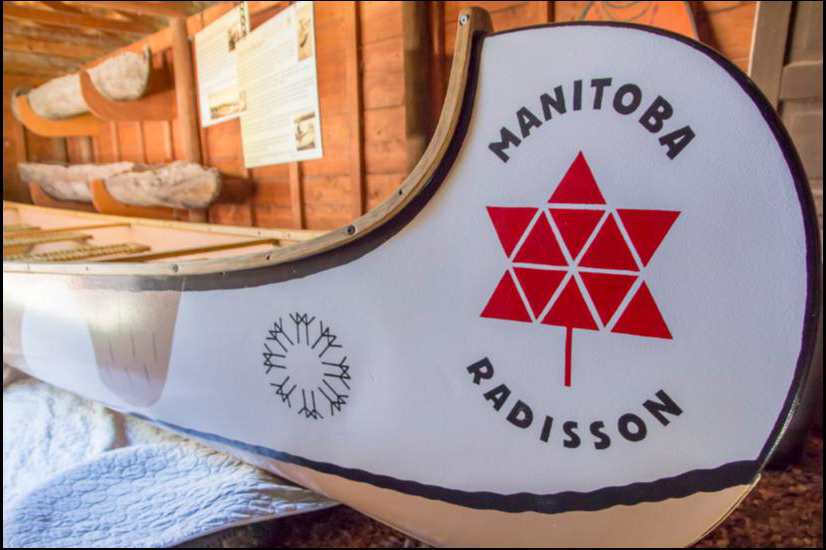
Each canoe, a fibreglass replica of the North birchbark canoe, bears the name of an explorer: British Columbia, Simon Fraser; Alberta, David Thompson; Saskatchewan, Henry Kelsey; Manitoba, Pierre Radisson; Ontario, William McGillivray; Quebec, La Verendrye; New Brunswick, Samuel de Champlain; Nova Scotia, Jean Cabot; Yukon, Robert Camell and Northwest Territories, Sir Alexander Mackenzie. 


Manitoba’s team, which has been leading the pageant, includes Gib MacEachern, Norm Crerar, Dave Wells, John Norman and Wayne Saltys, all of Flin Flon, Blair Harvey and Don Starkell, Winnipeg, and Joe Michelle and Roger Carriere of Cranberry Portage.3 

And they’re off!4 

It would be a journey to remember, and Canadian newspapers tracked their progress from start to finish.


Manitoba’s team was favoured. They were well trained, strong, and ready after winning a shorter, but similar event the previous year.5
It was a well-organized contest, with safety a top priority. Medical and other personnel were always on hand, and local police, RCMP, coast guard, navy, and government individuals monitored the action. Each team had a crew of six and three spares, with a manager who helped organize provisions. Supplies included 6,000 litres of insect repellent and extra pants.

The grueling schedule required crews to paddle at least six to eight hours a day at a pace of 60–65 strokes per minutes, with ten-minute breaks every hour. Every thirty seconds, paddlers would shift paddle sides, sliding along their seats, without breaking their pace. This sliding action wore out their pants, a risk that was anticipated by the Great West Garment Company which supplied each paddler with three pairs of jeans.6

The route was carefully planned, directing the canoes down 11 rivers and across 24 lakes. The 113 kilometers of 70 portages added to the strenuous challenge. Sometimes teams had to pull their 249-pound (113-kg) fibreglass canoes through shallow water. At other times they braved formidable rapids and wild lakes.


Crews would sprint into many of the 90 key communities along the route. They were warmly welcomed each time, and jubilant centennial celebrations added to the excitement. These events required teams to stay on schedule, and they did, averaging 6-1/2 miles (10.5 km) per hour.


That pace burned a lot of calories and required great stores of provisions. Hot meals awaited the paddlers at each stop.

But unlike the original voyageurs who thrived on a diet of pemmican and beans, the 1967 version will consume 30,000 eggs, 2-1/2 tons of bacon, 60,000 pancakes, six tons of steaks, 2-1/2 tons of potatoes and 5,000 loaves of bread.7

Manitobans were thrilled to see their team doing so well, and eagerly followed their progress. The Radisson canoe led the others into The Pas on June 13, ahead of British Columbia, Alberta, Saskatchewan, Ontario, New Brunswick, Quebec, Northwest Territories, Yukon, and Nova Scotia.


 Schedule in Manitoba and into Ontario:

June 1315

The Pas

June 17

Duck Bay

June 20

Crane River

June 23–24

Dauphin

June 25

Portage la Prairie

July 1

Winnipeg

July 2

Selkirk

July 3

Grand Beach

July 4

Pine Falls

July 5

Lac du Bonnet

July 6

Pinawa

July 7

Pointe du Bois

July 9

Minaki

July 10

Kenora

July 12

Rainy River

July 14

Fort Frances

July 24–26

Fort William / Port Arthur (Thunder Bay)


Although the standings remained fairly constant, it was often a close race, especially between the leaders, Manitoba and British Columbia. Speed was one factor, navigation another. 

Manitoba paddlers took a commanding lead Sunday [June 25] in the centennial voyageur canoe pageant. The nine other canoes went off course on a 35-mile [56-km] lap from Amaranth to Delta and did not cross the finish line for nearly an hour after Manitoba. […] The error was similar to one made by Manitoba and eight other canoes last week when British Columbia was the only canoe to take the proper course and wiped out a 40-minute lead held by Manitoba at that time. The Manitoba team let out a loud cheer when they heard the remainder of the field was off course. They felt they had gained the time lost when they made the same mistake.8

On June 26 Manitoba beat Ontario by a mere 14 seconds in the two-mile (3.2-km) sprint into Portage la Prairie. British Columbia was only three seconds behind Ontario.


Having led from the very start, Manitoba remained in first place overall, with a time of 183:19.44 when they reached Portage la Prairie. Rival British Columbia was close behind at 184:50.15, followed by Alberta, Ontario, Saskatchewan, New Brunswick, Quebec, Northwest Territories, Yukon. Nova Scotia, still trailing, clocked in about 20 hours behind the leaders.  


“Manitoba team members: Norm Crerar with straw hat, Wayne ‘Salty’ Soltys and Gib McEachern holding two paddles.” Photo: Glenn Fallis9

All the teams were glad to have completed the 12-mile (19-km) portage between Delta Creek to the Assiniboine River. It was the longest portage in the entire race. Portages were necessary, of course, but were not timed. The voyageurs were allowed to portage their 25-foot (7.62-metre) canoes “by any means which might have been used 100 years ago.”10 Alberta and Quebec were the only teams to portage by hand. Others were more creative. New Brunswick used women to portage their canoe. Saskatchewan pulled theirs on a cart, while Manitoba and other teams used horse-drawn wagons. 


Manitoba’s team won the 79-mile (127-km) lap from Portage la Prairie to Bison Park (just west of Winnipeg) in nine hours and 38 minutes, beating rival British Columbia by three minutes. Manitoba enjoyed a 1-1/2-hour lead in the overall race. 


ST. CHARLES


On Wednesday, June 28, the canoes reached St. Charles, on the western edge of Winnipeg. School children were among the crowd that cheered the teams’ arrival at a new dock at the end of St. Charles Street where a ferry had operated from 1908 to 1959. 

The 10 canoes arrived at about 11 a.m. after completing a 14-mile [22.5-km] lap race from Bison Park to the Perimeter Bridge across the Assiniboine River. The canoes travelled as a brigade, from the race finish line to the St. Charles pier where they were greeted by about 500 spectators and Mayor J. H. Belows of Assiniboia.11 

British Columbia beat Manitoba in the sprint lap race by 10-1/2 seconds. Sprints were worth money, but did not affect overall standings, and the Radisson team remained in first place overall.

The lap was a difficult one for all teams due to hot temperatures and shallow water. […] Paddlers had to get out of their canoes on several occasions to push the craft off sandbars. 

When the Manitoba team crossed the finish line they were paddling at about 72 strokes a minute. The temperature was 79 degrees and there was no breeze on the sheltered water.


[Manitoba team captain] Mr. Crerar said the water in the Assinboine River appeared to be badly polluted and the odor bothered the paddlers. “I bet every pig pen in Manitoba drains into that stream.”12 

Winnipeggers celebrated the arrival of the Voyageurs.13 

Local kids knew the Assiniboine was polluted, but could easily wade across the shallow river and often did. The temporary dock was removed, but not before a few kids pulled the styrofoam slabs out to use as rafts.


Twenty thousand spectators greeted the teams in Winnipeg, the half-way point in the race. It was a welcome destination. Having travelled over 1,400 miles (2253 km), teams deserved a two-day break. They had medical checkups at St. Boniface Hospital, which they aced. Afterwards, the crews enjoyed a hearty lobster dinner sponsored by New Brunswick. 


On July 1, Dominion Day (renamed Canada Day in 1982), thousands attended a centennial ceremony at the Legislative Building. Celebrations included a regatta on the Red River where paddlers demonstrated their skills and had a short sprint race.


Chef John Peterer trained in Switzerland and came to Canada in 1965. He shared his expertise as a popular instructor at Red River College.14

The teams enjoyed their break in Winnipeg, but were ready to leave its polluted and shallow waters and head for Selkirk and then Grand Beach. Sprints were still tight; British Columbia won by 1-1/2 seconds at Grand Beach, but Manitoba retained its 90-minute lead overall. 


The Lake Winnipeg stretch presented one of the toughest yet. Teams were advised to head out early, when conditions were better. Still, whitecaps driven by strong northwest winds were a definite hazard. One team had to bail out their canoe as they travelled.15


From shallows to whitecaps, crews dealt with every kind of water hazard.16 

Manitoba won the sprint into Pine Falls, nine seconds ahead of Ontario. Alberta was third, and British Columbia was in uncharacteristically fourth place. 


Pointe du Bois was the last stop in Manitoba. On July 8 teams competed in another lap race from one campsite to the next, their first since racing from Bison Park to Winnipeg.

Lap races are considered the most difficult feat of the pageant and have the biggest result in the over-all standings. Today’s race will be from here to North Boundary Falls, an island about 50 miles northwest of Minaki, Ont.17  

Lap and sprint races remained close. Manitoba won the 30-mile (48-km) lap race from Pointe du Bois to North Boundary Island, beating British Columbia by 40 seconds, and beat them in the 1-1/2-mile sprint into Minaki by 11 seconds.


On July 10 the race was officially turned over to the Ontario government in Kenora. The Manitoba paddlers were in fine form as they entered the province, increasing their overall lead to one hour, 40 minutes. 


On Tuesday, July 11, an all-day lap race took canoeists through Lake of the Woods to Sandy Point. It tested their navigational skills.  

There are more than 14,000 islands with more than 60,000 miles of shoreline in the lake. All agree that it would not be hard to make a navigational error. […] They are expected to reach Rainy River Wednesday night and will follow the Rainy River system through Ontario and Minnesota to the Lakehead. From there they cross Lake Superior to Sault Ste. Marie, Lake Huron and up the Mattawa-Ottawa water system to the St. Lawrence.18  

Alberta shows how to tackle rough water. The Yukon team had to be rescued when their canoe was swamped in the Lachine rapids.19

Lake of the Woods was more than a navigational challenge. On July 12, high winds and waves caused a five-hour delay between Sandy Point and Rainy River. Waves as high as 12 feet (3.66 m) were not safe for a six-mile (9.66-km) stretch of open water. Waiting for the winds to die down, the brigade was escorted by a number of safety boats, and reached Rainy River in the evening.


For the first time in the race, rough conditions caused cancellations.20

Rapids, however, would not subside, and there were two major sets of the Manitou rapids. It was a difficult and exhausting stretch, especially for New Brunswick, which needed two attempts. 


British Columbia was unhappy to be fifth in the lap up the Rainy River to Emo, Ontario.21

A three-mile (4.8-km) sprint into Fort Frances and a portage through its downtown attracted local crowds, as well as Americans from International Falls, directly across the border. Teams were celebrated with a dinner and dance. 


On Saturday, July 15, the teams headed to a quieter spot. 

Today the canoeists head into Quetico provincial park where they will be isolated for three days. They will be forced to carry their bedroll and food rations with them, their only contact with civilization being through radio.22  

After the quiet of Quetico provincial park, the teams’ next destination was Lake Superior, where rough lake conditions were expected. British Columbia won the July 22 lap, but by this point Manitoba had a two-hour lead overall. On the following day the canoes were welcomed at a reconstructed Northwest Company fort at Grand Portage, Minnesota.


Surprisingly, calm water on Lake Superior allowed teams to arrive at Red Rock, Ontario 24 hours ahead of schedule. Taking advantage of the good conditions, teams combined two stretches, and covered 84 miles (135 km), the second-longest one-day stretch after their 89 miles (143 km) on Lake Winnipeg. 


Conditions remained favourable along Lake Superior’s north shore when the teams reached Terrace Bay, Ontario, on August 1. From there 250 miles (402 km) of open water lay ahead. A coast guard cutter and two Royal Canadian Navy ships maintained their surveillance as a safety measure, and wooden paddles were swapped out for aluminum ones that would be visible on radar. 


By August 23 the teams had left North Bay and the deep waters of the Great Lakes and had to contend with shallow rivers again. They also faced a new hazard: log booms!

The centennial voyageurs arrived here [Mattawa, Ontario] from North Bay after paddling and portaging one of the toughest stretches to date of their Centennial Year canoe pageant from Alberta to Expo 67. The 50-mile [80.5-km] stretch over shallow areas of the shale-covered Ottawa River scraped the bottoms of the canoes so badly they had to be re-waxed. […] One pageant official said the stretch was the worst since the Minnesota border. […] Today, the six-man crews were to paddle through onrushing logs and narrow channels between log booms, something they have not encountered previously.23 

Manitoba led the rest when they reached Ottawa on Tuesday, August 29.


Among other hardships, the teams “endured about 100 nights of parties.”24 

Canada’s capital city came out in full force to welcome the voyageurs of 1967 when they arrived in Ottawa on Tuesday, August 29. Dignitaries and politicians addressed the large crowds.


“Secretary of State Judy LaMarsh tries on a buffalo robe that she will receive officially from the Alberta paddlers when the Centennial Voyageurs reach Expo next week. Miss LaMarsh welcomed the voyageurs on Parliament Hill Wednesday. With her are Centennial Commissioner John Fisher (left) and Col. William Matthews, chief of the voyageur pageant.” 25

The end was in sight. After the fanfare in Ottawa, the teams headed to their ultimate destination: Expo 67 in Montreal. 


It had been a long 104 days. “Manitoba’s team completed the trek in 531 hours, 6 minutes and 15.6 seconds. B.C. was second at 532:28:14. Alberta was third at 535:26:14. […] Ontario finished in fourth place followed by New Brunswick, Saskatchewan, Quebec, Northwest Territories, Yukon and Nova Scotia, in that order.”26

Flin Flon, Manitoba and Creighton, Saskatchewan honoured their teams at a banquet in September, 1967.  


Nine members of Manitoba’s team were from Flin Flon, and “17 of the 18 paddlers that made up the Manitoba and Saskatchewan teams had learned to paddle in this northern area.” They were the best paddlers in Canada.27

All agreed that “the pageant was the greatest single event of the centennial year.” The kids in St. Charles would agree.


Manitoba’s winning canoe, on display at Polo Park shopping centre, Winnipeg.28 

Radisson, Manitoba’s restored winning canoe, on display at Fort Dauphin Museum.29

Sources (retrieved June 4, 2025)

  1. Craig Baird, “The Voyageur Centennial Canoe Pageant,” Canadian History Ehx, September 12, 2023. https://canadaehx.com/2023/09/12/the-voyageur-centennial-canoe-pageant
  2. “Navigating the Rapids of Research for a Canadian Canoe Race Connection,” TheWristorian [blog], Nov. 20, 2020. https://www.thewristorian.com/post/wittnauer-canoe-race 
  3. “Manitoba Dips A Paddle For Canoe Marathon,” Winnipeg Free Press, June 6, 197, p. 8
  4. “Centennial Voyageur Canoe Pageant,” Wikipedia, photo by Frank Grant. https://en.wikipedia.org/wiki/Centennial_Voyageur_Canoe_Pageant 
  5. Jack Bennett, “A Journey To Remember,” Winnipeg Free Press, April 18, 1967, p. 24
  6. “Centennial Voyageur Canoe Presentation,” The Millbrook Times, December 2024. https://themillbrooktimes.ca/centennial-voyageur-canoe-pageant-presentation/ 
  7. “Manitoba Dips A Paddle For Canoe Marathon,” Winnipeg Free Press, June 6, 1967, p. 8
  8. Neil Louttit, “1-1/2-Hour Lead For Manitoba,” Winnipeg Free Press, June 26, 1967, p. 3
  9. James Raffan, “Tracking Down The Canoes From The World’s Longest Paddling Race,” Paddling Magazine, Issue 64, Summer 2021. https://paddlingmag.com/stories/columns/tumblehome/centennial-voyageur-canoe-pageant/
  10. Neil Louttit, “Voyageurs Head For Winnipeg,” Winnipeg Free Press, June 27, 1967, p. 3
  11. “Manitoba Leading Crews In,” Winnipeg Free Press, June 28, 1967, p. 3
  12. Ibid.
  13. Ibid.
  14. “Manitoba Retains 1-1/2-Hour Margin,” Winnipeg Free Press, June 29, 1967, p. 3
  15. “B.C. Wins Sprint Over Manitoba,” Winnipeg Free Press, July 4, 1967, p. 3
  16. Craig Baird, “The Voyageur Centennial Canoe Pageant,” Canadian History Ehx, September 12, 2023. https://canadaehx.com/2023/09/12/the-voyageur-centennial-canoe-pageant 
  17. Neil Louttit, “Canoe Pageant Nears N.W. Ontario,” Winnipeg Free Press, July 8, 1967, p. 3
  18. Neil Louttit, “LaMarsh Lauds New ‘Canadian Spirit,’ ” Winnipeg Free Press, July 11, 1967, p. 3
  19. Joanne Elves, “Voyageurs race from Rocky Mountain House to The Pas to celebrate Canada150,” Calgary Herald, June 21, 2017. Photo: Voyageurs Rendezvous 2017. https://calgaryherald.com/travel/voyageurs-race-from-rocky-mountain-house-to-the-pas-to-celebrate-canada150
  20. Neil Louttit, “High Wind, Waves Halt Voyageurs,” Winnipeg Free Press, July 13, 1967, p. 3
  21. Neil Louttit, “Manitoba First Through Rapids,” Winnipeg Free Press, July 14, 1967, p. 3
  22. “Fort Frances Welcomes Canoe Teams,” Winnipeg Free Press, July 15, 1967, p. 3
  23. “Manitoba Voyageurs Lead Pack,” Winnipeg Free Press, August 24, 1967, p. 46
  24. “7,000 At Ottawa Greet Centennial Voyageurs,” Winnipeg Free Press, August 30, 1967, p. 35
  25. “Voyageurs Greeted on Hill,” Winnipeg Free Press, August 31, 1967, p. 50
  26. Neil Louttit, “First To Expo: Manitoba Canoeists Win Race,” Winnipeg Free Press, September 5, 1967, p. 1
  27. “The North Honors Manitoba Paddlers,” Winnipeg Free Press, September 20, 1967, p. 37
  28. Polo Park Shopping Centre, University of Manitoba Building Index. https://digitalcollections.lib.umanitoba.ca/islandora/object/uofm%3A2631225 
  29. M. A. Nyquist, “Voyageur canoe gets an overhaul,” Dauphin Herald, July 11, 2017, p. A3


⇧ BACK TO TOP