Well,
unless you’re trekking from Sidney, La Rivière,
or Leary. Then you’d be following the red brick road.
 |
| Fredrick Guise Stevens |
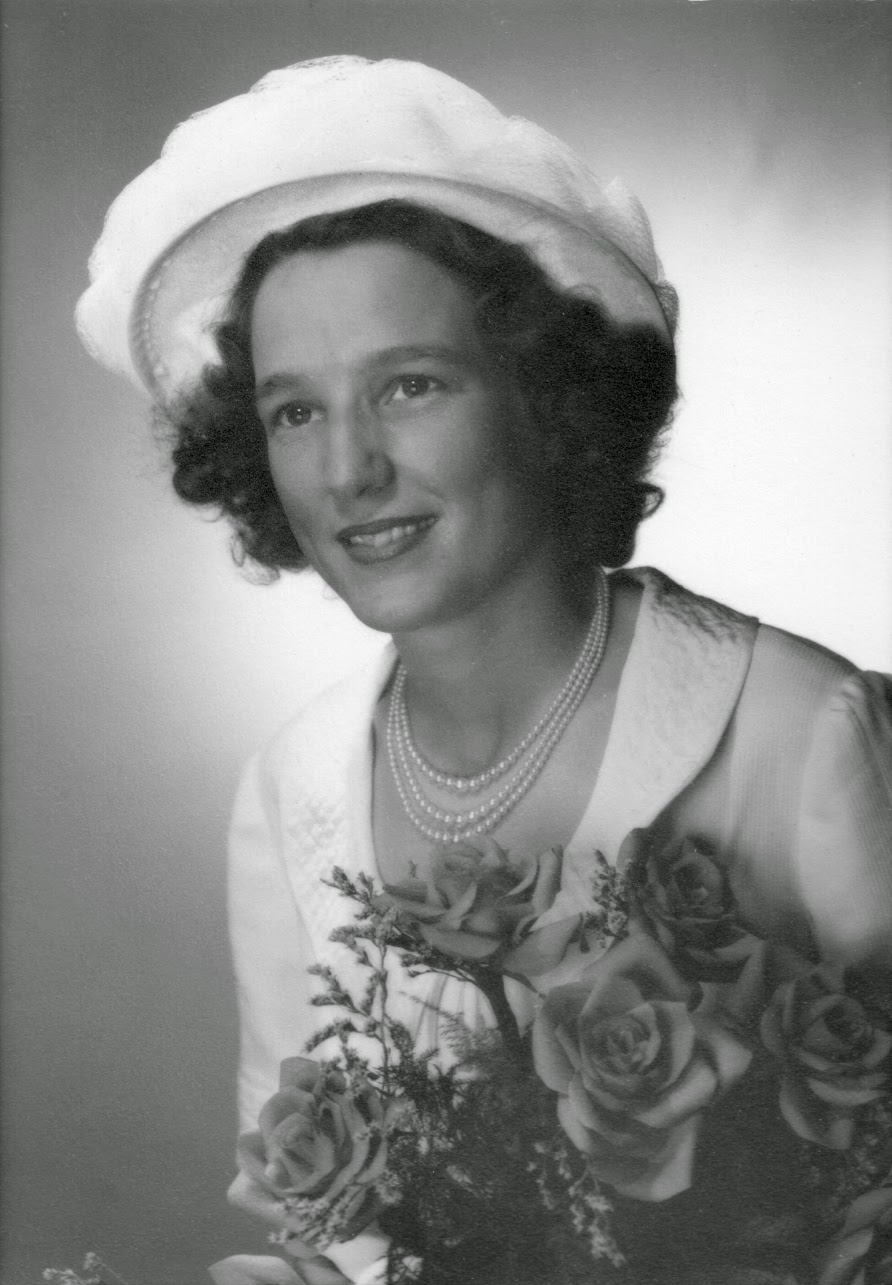
Mom’s
dad, Fredrick Guise Stevens, was the only child of Mary Elizebeth and Frank N. Stevens. In 1907, at the age of 23, he sailed out of Liverpool on the S.S. Siberian bound for Halifax. His occupation was "coal miner."
Ten years later, Fred married Zelma Victoria Hood, on November 14, 1917. Otherwise, we know very little about him. Indeed, Dad never even met his father-in-law, because Fred died on November 13, 1949.
The
Stevens family, including Mom and her five brothers, lived in a number of small
Manitoba towns, as Fred sought employment in the brick-making industry.
 |
| Three of the many brick plant towns the Stevens family lived in: Sidney (blue square), Roseisle (green triangle), and La Rivière (red circle) |
Brick Making in Manitoba
Manitoba’s
building boom of 1880 to 1912 was an especially prosperous time for the
brick-making industry. The Winnipeg Tribune noted on September 9, 1911 that:
There is on an average one hundred millions of bricks being imported every year from the United States to the city of Winnipeg, and the demand is far in excess of the supply, so the natural consequence is that the common people are prohibited from building their homes with this desired material.
Likewise, a July 19, 1913 ad in the Tribune promoting investment in the British Canadian Brick & Coal Co., Ltd. noted:
It is a recognized fact that Brick and Coal are the commodities most in demand in this country and the combination is one of the most profit-making known. Contractors today are behind held up for want of brick despite the fact that over one million bricks per day are imported into Manitoba from the States.
There is no brick-making plant in Canada which is properly managed that is not making huge profits, and to insure the greatest security to the Shareholders the Company has employed the services of one of Canada's most expert brick men.
Interest in Real Estate is on the wane and legitimate development of the vast wealth of our country is taking its proper place. Use your capital to develop your industries, and get some of the cream that is going to foreign investors.
Manitoba’s plentiful clay and shale deposits (60
major sites) supported about 175 brick manufacturing plants. These operations
varied greatly in size, output, quality and longevity.
In
those years, even with steam and horse power, the work was hard, and workers
typically earned between two and three dollars for a 10-hour day. It was seasonal but steady
work, typically May to September.
Even
small yards were productive. Steam-powered brick makers could turn out 20,000
bricks per day, or about 100,000 in a week.
 |
| Fred Stevens hard at work -- where, when and doing what is anybody's guess. |
La Rivière Brickworks
La
Rivière is nestled in the beautiful Pembina
Valley, 18 km east of Pilot Mound on Hwy. 3. Long before it was known for its
skiing, the town boasted an impressive brick plant.
 |
| Brick plant at the east side of La Rivière (Source: Turning Leaves) |
A
1905 Geological Survey [3] reporting on clay and shale deposits in western
Canada, examined four shale types in southern Manitoba: Dakota, Benton,
Niobrara, and Pierre. Because of their differences (like burning colour,
plasticity, shrinkage, and tensile strength), the report recommended that
Pierre shales, such as those at La Rivière, be
mixed with Niobrara shales from Leary’s. La Rivière
was described thusly:
This town is situated on a railway about 84 miles
southwest of Winnipeg, Manitoba. The town itself lies in a small valley
surrounded by low hills, the slopes of many of which show outcrops of the Pierre
shale, and it is quite evident from the numerous outcrops around the town and
those in the railway cuttings to the east of the town that there is a very
large quantity of this material available. The plant of the Phoenix Pressed
Brick Co. is located on the edge of the town at the base of one of these shale
escarpments.
The bank of shale is about 70 feet in height, and
the material extends in a practically unweathered condition right up to the
grass roots.
 |
| A tram led directly to the shale deposits, La Rivière (Source: Turning Leaves) |
Turning Leaves: a History of La Rivière and District [4] published in 1979, notes that the brickyard opened in 1902 and
stayed in business for about five years, changing hands many times. The
Geological Survey (p.23), however, noted some new equipment at the plant during
a visit in June 1911.
 |
| Two of the beehive kilns, La Rivière (Source: Virtual Manitoba [1]) |
The
brickyards used beehive kilns. These are round brick structures wrapped in
steel bands to contain the expansion caused by the kiln’s heat. Bricks are
stacked inside with space between so the heat can encircle them. Early structures
used wood and coke as fuel, later replaced by gas and oil for better
temperature control. The beehive kiln requires at least one week to burn the
brick, which limits production.
Sidney Brickworks
The
Stevens family also lived in Sidney, 147 km due west of Winnipeg on Hwy. 1. In
its day, the small town also featured a brick plant almost as large as that in La Rivière. The Manitoba Historical
Society [5] lists it as an historical site:
In 1909, the Sidney Brick and
Tile Company began operations, erecting a brickworks two years later at a site
west of the village of Sidney. It supplied red-coloured brick for the construction
of numerous buildings throughout Manitoba, including several schools in
Brandon, the Eaton’s Mail Order building in Winnipeg, and Minto Armoury in
Winnipeg, as well as places elsewhere in Canada and the United States.
A shortage
of labour as a result of the First World War led to closure of the facility in
the early 1920s. Instead, clay quarried at the site was shipped to Winnipeg to
be made into bricks there. The property was owned by Alsip’s Building Products
until 1985 when it was sold as farmland to a local resident. A large depression
over much of the site identifies the location of clay excavation. The
foundations of several buildings are still visible, as are the remnants of five
brick kilns, water wells, and a loading ramp to a now-removed railway siding on
the adjacent Canadian Pacific Railway main line.
 |
| Sidney Brickyard, circa 1912 (Source: Manitoba Historical Society) |
 |
| Workers at the Sidney Brickyard (Source: Rob McInnes, Manitoba Historical Society) |
 |
| Sidney Brickyard (Source: Rob McInnes, Manitoba Historical Society) |
 |
| A narrow-gauge railway transported bricks through this tunnel between the kilns and storage buildings. (Source: Gordon Goldsborough, Manitoba Historical Society) |
Leary Brickworks
Roseisle
is a picturesque prairie town, 27 km west of Carman on Hwy. 245. Mom attended
grades 7 and 8 here, and it is where a number of her relatives, including her
parents, Fred and Zelma (née Hood)
Stevens, are buried.
Zelma was born March 12, 1898 in Leary, Manitoba, just west of Roseisle. It is in Leary that her Ontario-born parents, Oscar Edmund Hood (June 2, 1862 - January 23, 1938) and Mary Rosanna (née Weir) (September 6, 1871 - October 31, 1938) died. "Leary" likely refers to the Hood family farm, as the locale was little more than a whistle-stop (although there was a wee Leary School established in 1911).
 |
| The bustling metropolis of Leary, Manitoba |
However remote, no
discussion of Manitoba brick plants would be complete without mention of the Leary
Brickworks. As the only existing plant of its era, its now-derelict
buildings and kiln are a unique provincial historic site.
 |
| The Leary Brickworks in 2010, featuring a tall drying shed, engine room, beehive kiln and towering brick chimney (Source: Gordon Brown, Manitoba Historical Society) |
The
story was told by Sharon Reilly, in the Urban
History Review (Spring 2007) [6].
The
company was founded in 1900 as the Boyne Valley Brick Company by John George
Leary, one of several Irish Protestants who immigrated to Manitoba in the early
1880s.
The
location alongside the Boyne River in the Pembina Valley provided shale, sand,
water, and wood for fuel, along with a railway siding to ship its products, a salmon-red construction brick.
 |
| Early pressed brick, circa 1911 (Source: Ina Bramadat, Manitoba Historical Society) |
 |
| A later dry-pressed, single-frog brick, circa 1953. The indent (frog) allowed extra mortar, which adds strength in a masonry wall. (Source: Ina Bramadat, Manitoba Historical Society) |
The
plant produced good quality bricks and provided employment for nearby farmers
and unemployed labourers. In the engine room, up to 12,000 bricks could be
pressed in a day. Women found work maintaining the workers’ bunkhouses, keeping
vegetable gardens, and working as cooks. Sometimes children worked there, too, usually
turning the wet bricks to facilitate drying prior to being fired in the kiln.
 |
| George Leary, at left, supervises the dismantling of a temporary kiln used prior to the construction of the beehive kiln. (Source: Ina Bramadat, Manitoba Historical Society) |
 |
| A worker atop the beehive kiln monitors the 12- to 16-day firing process, May 1947. (Source: Ina Bramadat, Manitoba Historical Society) |
 |
| The same kiln in 2010 (Source: Lone Star Farm [7]) |
The
site included a three-storey high, 85×40-foot drying shed and a 56×40-foot engine room. Water for the boiler was pumped from the nearby
Boyne River, and the clay and sand travelled in cars on an elevated tramway
from the opposite banks.
 |
| Learys Brick Company letterhead, 1910 |
In
1905 Leary re-financed the brickworks as the Dominion Press Brick Company, with
a number of Winnipeg-based partners (including Premier R. P. Roblin). By 1910
Leary had regained control and ran the company with his sons as Learys Brick
Company. But by 1917 falling demand, the popularity of frame homes, and a
wartime labour shortage (including his sons’ military service) forced him to
close down.
 |
| Interior of the beehive kiln. It could fire 80,000 "green" bricks at a time, at temperatures up to 1800° F. (Source: Gordon Goldsborough, Manitoba Historical Society) |
George’s
son William returned after WWI hoping to re-open the business by the end of the
1930s, but war intervened again. After WWII, he finally refurbished the plant and
tried to start up the operation again in 1948, but found he could no longer
compete with larger firms. When William died in 1951 the yard was closed. Erven
Tallman purchased the yard in 1962 and after a single failed attempt to make
bricks, chose to sell the property back to the Leary family.
 |
| Leary's circa 1950 (Source: Ina Bramadat, Manitoba Historical Society) |
Sources